Rethinking Climate Justice and Development at the EADI Conference “Shaping Sustainable Futures: Global Challenges, (G)local Solutions”
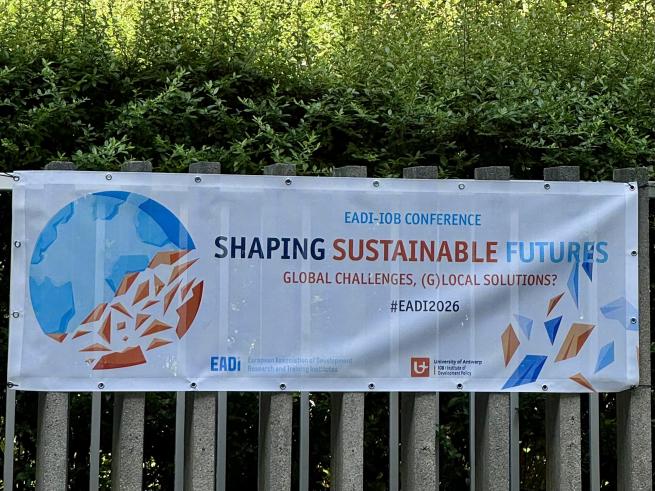
Bringing together development scholars from around the world, the European Association of Development Research and Training Institutes (EADI) just held its triennial conference in Belgium. The conference was hosted by the Institute of Development Policy (IOB), University of Antwerp and explored local/global challenges and solutions for sustainable futures. Mette Fog Olwig and Conrad John Masabo each presented a paper based on their research from the “Universal Aspirations versus Geopolitical Divides” project.
Mette Fog Olwig presented her paper “Grounding Global Climate Justice: Global Solidarity vs. Local Experiences in Youth Climate Action,” in the panel “Youth Activism and Climate Justice: Understandings, Negotiations and Future Visions” organized by Prof. Petra Dannecker and Fahima Al Farabi, University of Vienna, Austria.
Drawing on fieldwork with young people from Africa and Europe who met through international youth programs, conferences and training initiatives, Olwig examined the tensions between global solidarity and unequal local experiences. Her research shows that such initiatives can foster meaningful connections and shared commitments to climate justice across borders. At the same time, young people experience climate change and possibilities for climate action in profoundly different ways depending on where they live. Olwig argued that global climate agendas risk overlooking these local realities when broad concepts such as climate justice become disconnected from people's lived experiences.
Conrad John Masabo presented “Beyond African Solutions to African Problems (ASAP): Decolonizing and Recentering Development Studies on African Epistemic Agency” in the panel “Global Challenges, (G)local Solutions: Contributions from the African Development Studies” organized by Prof. Tiina Kontinen, University of Jyväskylä, Finland; Dr. Nyamwaya Munthali, University of Zambia, Zambia and Dr. Shukrani Mbirigenda, University of Dar es Salaam.
Masabo’s presentation addressed ongoing debates about decolonizing development studies and strengthening African contributions to knowledge production. Drawing on his own experiences teaching and researching in both Tanzania and Denmark, he argued that meaningful exchange requires more equitable partnerships between universities in different parts of the world. He emphasized the importance of two-way collaboration and mobility in generating solutions to sustainability challenges.
While focusing on different themes, both presentations addressed themes around inclusive and equitable forms of knowledge, collaboration, and action and highlighted the importance of ensuring that both local experiences and diverse perspectives remain central in efforts to create more sustainable and just futures.