Forthcoming Publication
The article will be published next year, but will be out online first before. Authors: M. Oteng-Ababio, R. Grant, P. Stacey, N. Torm & J. Rasmussen.
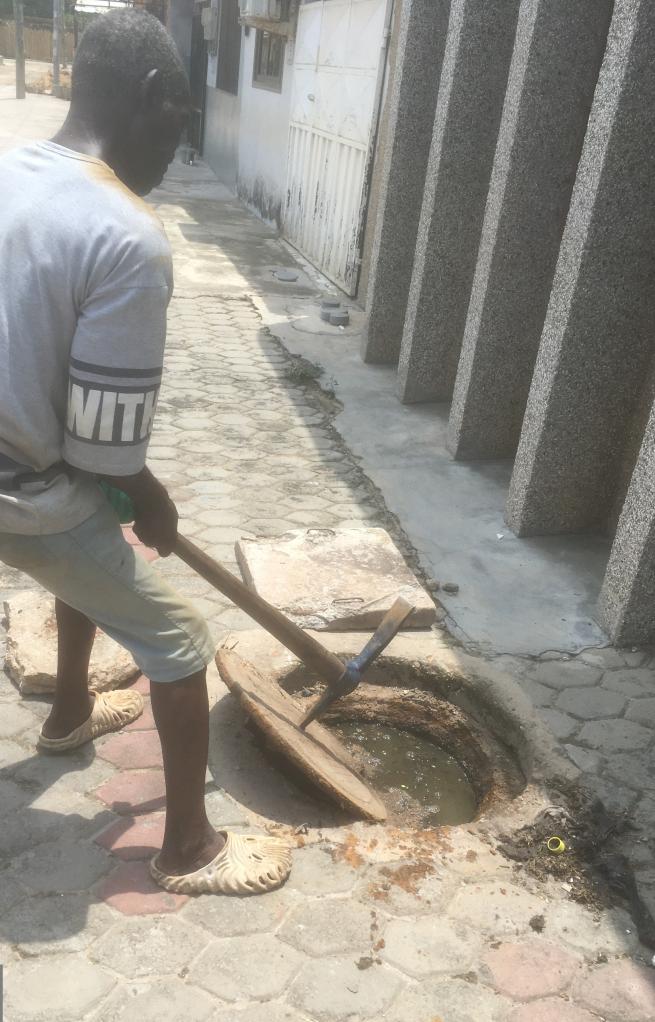
Hybrid sanitation infrastructure is prevalent in many residential areas, shaped by local contexts and the involvement of actors at various spatial scales. Our study, based in Tema, Ghana—a city originally designed but now facing disordered growth and increasing informality—examines cost-effective, off-grid sanitation interventions that address gaps, respond to service disruptions, and reconnect spatially fragmented areas. We identified five categories of hybrid sanitation infrastructural footprints within broader socio-technological contexts. These contexts encompass diverse technologies and unequal power dynamics, resulting in varied outcomes. Proximity and faecal matter management outcomes are significantly better in Tema New Town's informal community than in nearby middle-income neighbourhoods with a more substantial central grid footprint. Scaling upwards, outwards, and more profoundly is unfeasible due to the absence of a cohesive element. No recognised entity can leverage place-based experiences for transformation, coordinate efforts among various stakeholders, provide guidance, identify capability gaps, collect data, and demonstrate results. Consequently, the crucial role of intermediaries is highlighted to better link practice and policy arenas.