New VUCCA publication: Smallholder farmers’ adaptation at the climate–conflict nexus in Frontiers in Political Science
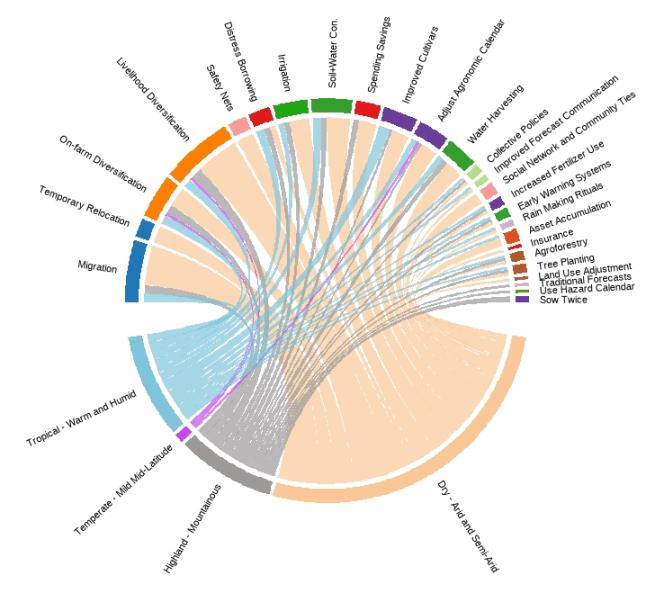
📰 Damasco Rubangakene, Christine Oryema and Martin Reinhard Nielsen latest systematic review synthesizes two decades of empirical research (2004–2024) to provide an integrated understanding of adaptation in these complex contexts. Following PRISMA 2020 guidelines and drawing on studies from Web of Science, Scopus, and ProQuest, the review reveals both emerging progress and critical knowledge gaps.
🔎 We identify eleven integrated adaptation strategies used by smallholder farmers across conflict-affected regions of the Global South. At the same time, the evidence shows that:
➡️ 67% of studies do not clearly link adaptive capacity to specific vulnerabilities
➡️ One-third overlook how power relations and social hierarchies shape adaptation outcomes
➡️ By consolidating fragmented knowledge across disciplines, this research offers practical guidance for development agencies, local governments, and NGOs seeking to design integrated interventions that strengthen resilience, reduce vulnerability, and support sustainable livelihoods in fragile settings.
Read the full article here: https://www.frontiersin.org/journals/climate/articles/10.3389/fclim.2026.1699078/full